

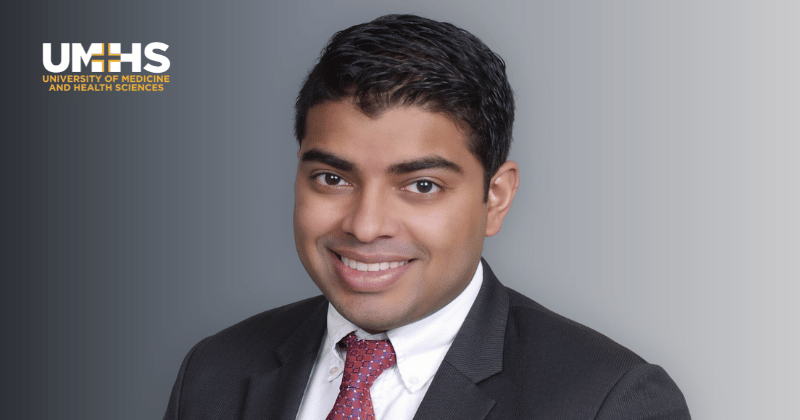



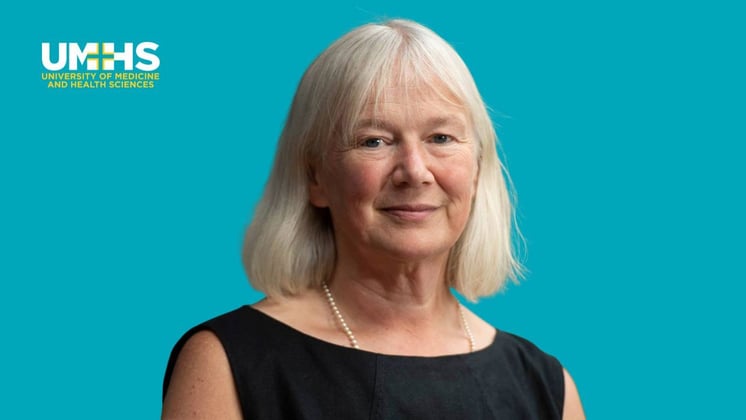

At UMHS, preparing future physicians to excel in medicine is at the heart of everything we do. Few people embody that commitment more than Dr. Cathy Jackson, our Provost. With decades of experience in clinical medicine, medical education, and curriculum development, Dr. Jackson is uniquely positioned to lead UMHS in shaping innovative programs that equip students to succeed academically and professionally.
We sat down with Dr. Jackson to learn more about her journey from clinical practice and academia in the UK to establishing new medical schools, her vision for UMHS as the gold standard for medical education, and how her work supports students in achieving their full potential.
Q: Can you tell us a little bit about your background before coming to UMHS?
Dr. Jackson:
I started out in internal medicine and did several training posts in cardiology, neurology, renal medicine, GI medicine, endocrinology, and respiratory medicine. My husband is also a clinical academic—a pulmonologist—and because the UK training system sends you wherever it likes, it made sense for one of us to retrain if we wanted to live in the same house. I retrained in primary care, thinking it would allow more flexibility for a family.
I have three sons. Our youngest child was quite ill for a long period of time when he was young, so I worked from home when I could. I did a lot of medical writing, particularly for an organization called Patient, producing evidence-based summaries for clinicians. I also helped colleagues with papers, drafts, and data analysis. By the time I was able to work full-time, I had built up quite a portfolio and could apply for a role as an academic.
Around 2002, I applied for a clinical lecturer role at Dundee University to create a clinical communications course, because at the time, it was a new element to training and there wasn’t one. I researched, trained, and built the program from scratch. Two years later, I was promoted to senior lecturer and also became involved in a large Scottish genetic database study with 30,000 participants followed longitudinally.
I developed a reputation for curriculum design and development, amongst other things. St. Andrews University, at the time, was at risk as the GMC had asked it to modernise its course and create an integrated clinical program, so they asked for help from the University of Dundee, and I was thought to be the appropriate person to help them. Together with the team there, I redesigned the clinical course, recruited staff, secured placements, and mapped everything to GMC standards in under six months. When the GMC visited, they suggested to the University that they might usefully use someone like me, and so I was offered a tenured chair— believed to be the first female tenured clinical chair in St. Andrews’ medical school's 600-year history.
I stayed there for years and was very happy, but an opportunity arose to build a new medical school from scratch at the University of Lancashire. At the time, that sort of opportunity almost never occurred. So I left St. Andrews, an extremely old “ivy league” type of university, to join a “modern” university, founded in 1828 but only achieving university status in 1992. The modern university has an ethos of encouraging those who might not otherwise have the opportunity to achieve their goals - something I very much believe in. At the University of Lancashire, I built the team, and together we wrote a completely new curriculum, the first of its kind for probably almost 50 years. I joined as Founding Head of the Medical School but later went on to become the Executive Dean of the Faculty of Clinical and Biomedical Sciences, heading up the schools of medicine, dentistry, pharmacy, optometry, biomedical sciences, and, latterly, also the new veterinary school. I then served as Pro Vice Chancellor for Health, overseeing health program development in the UK and internationally. That’s the role I was in prior to joining UMHS.
Q: What do you enjoy about developing curricula?
Dr. Jackson:
I think it’s playing with ideas. When you sit in academia for a long time, you can see things that can be improved. It’s the ability to take those things forward. I speak to faculty and say, “Do you think…?” and they say, “Yeah, we’d love to do that.” People have sat on these ideas for a long time, but it’s having the ability to move them ahead.
It’s playing with ideas, changing things a bit, and seeing if you get a better outcome. That’s the fun bit to me, always trying to improve things.
Q: You’ve described how St. Andrews became stuck in long-standing practices and fell behind prior to you joining the faculty. Why is it important for curricula to continually evolve?
Dr. Jackson:
St. Andrews is where the future King and Queen of England went to university. It is a great university, but still, they were in danger of losing accreditation because they’d decided they’d always done it this way, and it worked, so it was fine. But the world moves on. Technology moves on. Everything moves on.
Every faculty team should challenge itself each year and ask: What went well? What went badly? What are we going to do more of? What are we going to stop? What do we need to change? If you bring students into that discussion—they are the consumers at the end of the day—you stay fresh and keep up with the current evidence base.
It’s a bit like a doctor who trained 50 years ago. If they haven’t read anything since, they might as well not be in the room. You need to keep going, keep looking, keep learning, keep changing, keep reviewing. Medicine moves fast, so we have to keep up. Technology allows us to do things differently these days, but even without it, you can still change things every year. That’s fun.
Q: Moving from the UK to the Caribbean is a significant transition. What attracted you to UMHS?
Dr. Jackson:
I’m at an age where many might consider retirement, but where would be the fun in that? I was sitting at work late one night, having a cup of coffee and browsing the Times Higher Education Supplement. I saw an advert for St. Kitts. I happened to know St. Kitts because I had visited in my role as Executive Dean when I went to the veterinary school next door. I read a little further and thought, “Oh, that could be fun.”
Within 15 minutes, I’d found my CV and dashed off a letter. Two days later,I received an email saying, “We need an interview,” and I thought, “Pardon? Excuse me?” It turned out to be an interview with President Warren Ross and the whole team. They then said, “We’d like you to come and have a look,” and well, who’s going to say no to a couple of days in St. Kitts?
There’s a great faculty here, a great team. They’ve worked here a long time and are very stable, which is always a good sign. It was that itch again to do something where I could make a difference. And I thought it would be a nice adventure before I hang up my stethoscope. I came here for another adventure, basically.
Q: What do you see as UMHS’s current strengths?
Dr. Jackson:
I think it’s the stability of the faculty—and not because they’ve got nowhere else to go. Any one of them could get a job anywhere else tomorrow. They’ve become a very supportive unit, not just of each other but also of the students, and they really care. It’s lovely to see how much they care about the students.
It’s not just, “I’m teaching, then I’m off.” They know the students by name, their quirks, where they’ll hide, and whether they’ll be late. They know these individuals as individuals. They’re a faculty “family” that really wants to get the best out of students. You don’t see that everywhere, and when you do, it’s a very good sign—it shows the culture of the organization is a good culture.
Q: What are your goals moving forward, and what are you hoping to achieve?
Dr. Jackson:
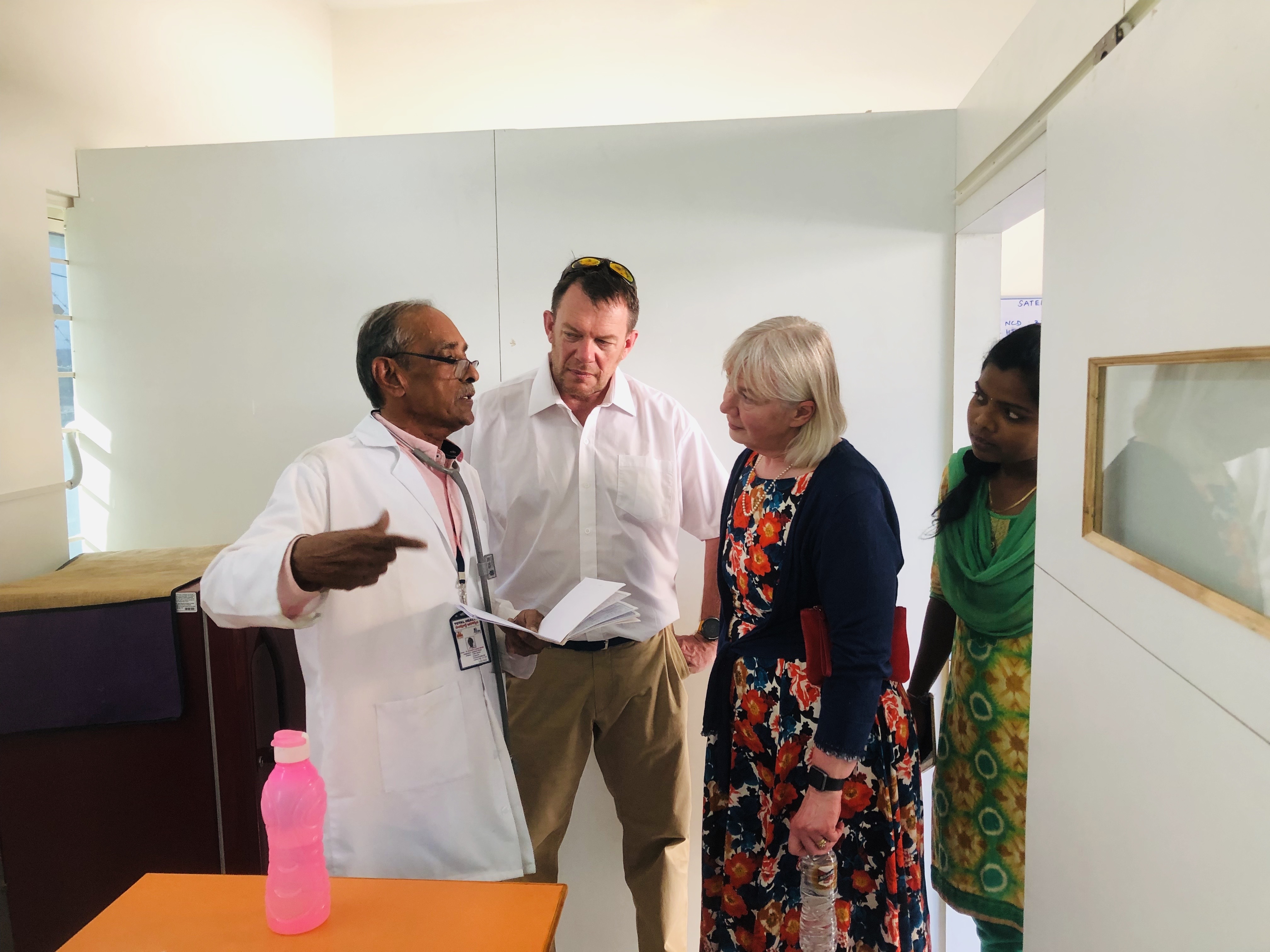
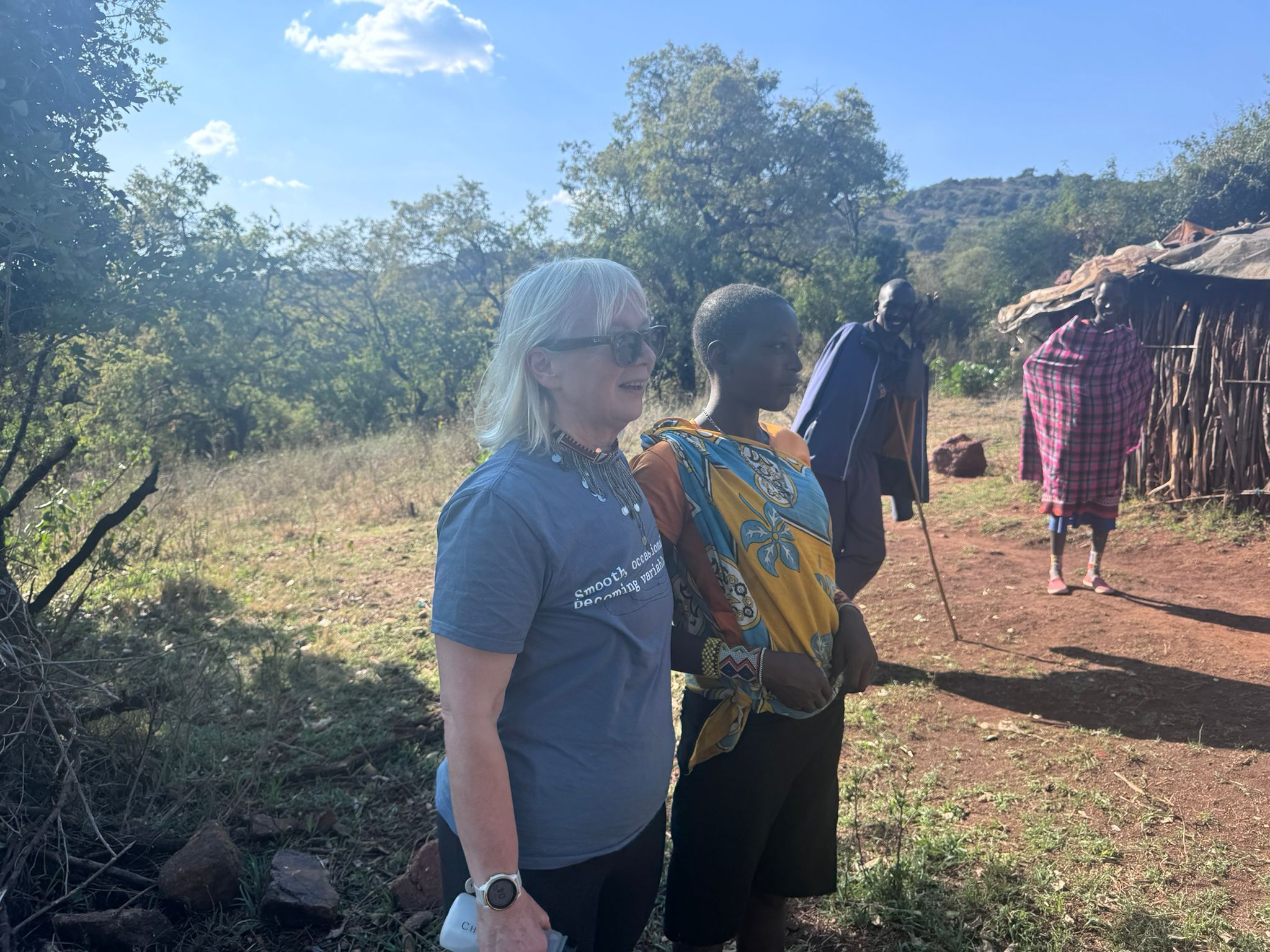
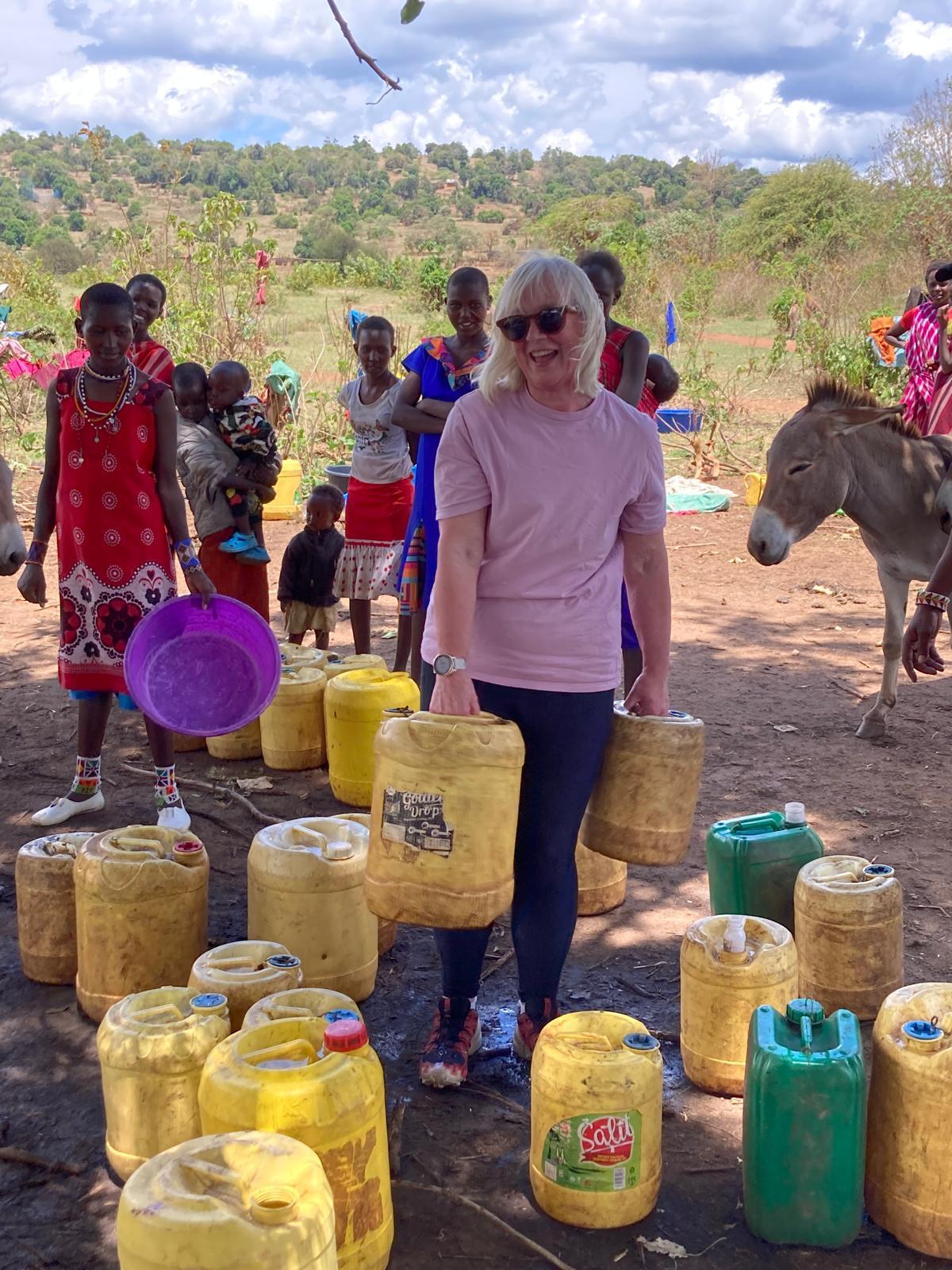
My passion is remote and rural medicine, which St. Kitts fits into. I hope to bring some of my research interests to the island and spread them.
I mentioned to the President, “I think we have the basics here of producing the gold standard of Caribbean medical schools.” I know that, in the same way everyone at older established universities in the UK looks down on the “ modern universities” but during our curriculum development, the GMC instructed two of the top of the league medical schools both very old, established schools—to come and talk to me because what we were doing at Lancashire in some areas was better preparing our students to become doctors in the workplace.
It’s the ability to see what you’ve got, what’s good about it, and how to make it the very best. The potential here is to become the gold standard of Caribbean medical schools, putting it up alongside the best U.S. mainland allopathic schools. That’s what I’m aiming for.
Q: Is there anything else you’d like to share about UMHS, particularly its resources and student support?
Dr. Jackson:
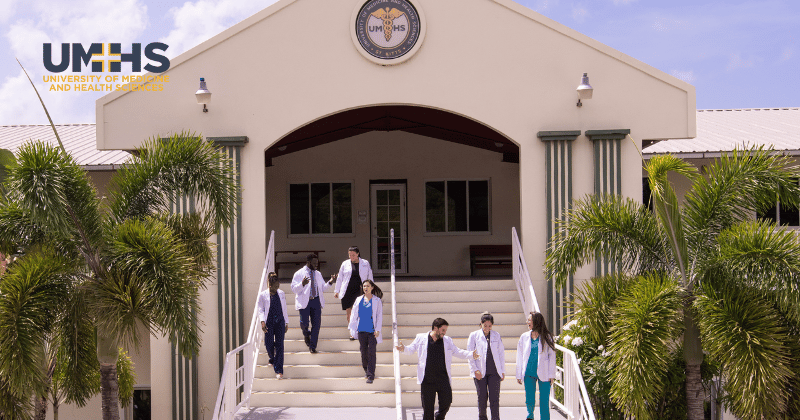
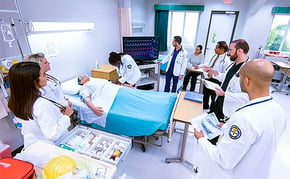
The resources here are fantastic. The president is always open to providing new resources where they’re needed. The students are extremely well-supported. The resources available and the learning support are excellent. It’s geared toward getting the best out of every student.
I’ve worked with and have experience with other Caribbean Schools, and I know that’s not always how they operate. UMHS is very different.
The size here is great for nurturing students. It’s not a massive commercial enterprise that takes in students and spits them out if they don’t make it. It’s a place that cares about each student, which makes a difference to their education and the life they’re going to have. It’s a massive investment and very high stakes. As I was telling someone the other day, if we take them through the front door, it’s our job to help them achieve their goal.
Q: Before we wrap up, is there anything else you’d like to share?
Dr. Jackson:
I’m still a practicing clinician, working in urgent care—anything that comes through the front door.
I’m also still doing research. I am involved in a project looking at improving health outcomes in those living and working in agricultural settings. We presented this to a UK parliamentary body last year, and we’re doing it again in January and February. From my research, I know the problems in the U.S. are exactly the same as in the UK—a bigger country, same problems.
I’m a member of the Global Center for Remote and Rural Health. We hope to start global grand rounds soon—taking cases from remote and rural areas anywhere in the world and presenting them to students, doctors, and clinicians who want to listen and discuss. I have also recently led a study with over 50 collaborators from five continents to create a core medical curriculum for all health workers in remote and rural areas throughout the world, which we hope to publish soon.
Lastly, the Royal College of Surgeons of Edinburgh recently awarded me a Fellowship of the Faculty of Remote, Rural and Humanitarian Medicine in recognition of the work I have done in this area over the decades. I’m chuffed to have been given this and will formally receive it at a ceremony in March at the Royal College.
You can follow the latest news and updates on Dr. Jackson by following UMHS on LinkedIn.
Megan is a Public Relations & Communications Consultant for UMHS. When she's not working with UMHS faculty, students and alumni to promote their expertise through media coverage and special events, she enjoys spending time outdoors in her hometown of San Diego.