
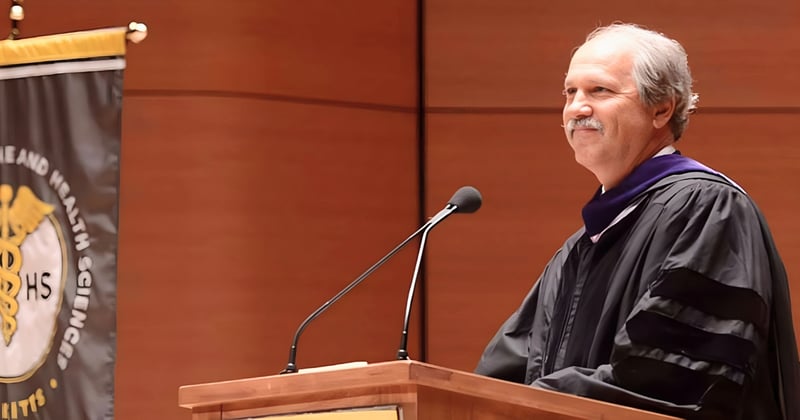

When Dr. Robert Ross helped pioneer Caribbean medical education nearly five decades ago, his goal wasn't simply to create another medical school; it was to expand opportunities while maintaining the standards, innovation, and support students needed to succeed. Throughout his career, he became known for developing academic institutions that combined rigorous education with a commitment to student success and compassionate patient care.
Today, his son, Warren Ross, continues that mission with a philosophy that stands apart in a landscape increasingly shaped by high enrollment and the bottom line: a medical school’s responsibility doesn’t end when it accepts a student; it begins there. Known as “Warren” around campus, he has built UMHS around that same focus on personalization, making student success an institutional obligation rather than simply an individual one.
If a student is admitted to UMHS, Warren believes the institution has a responsibility to give that student every reasonable opportunity to succeed. That philosophy has shaped a model built around personalized education, accountability, and outcomes – not volume – with small classes, accessible faculty, academic interventions, and comprehensive support embedded into the educational experience. At UMHS, support isn’t something students seek when they struggle; it’s built into the model from the start.
As Warren puts it: "I'm morally obligated to anybody who's accepted into this program to ensure that they're going to succeed."
We sat down with Warren to discuss his unconventional path into medical education, why he intentionally built UMHS differently, and what student success really means.
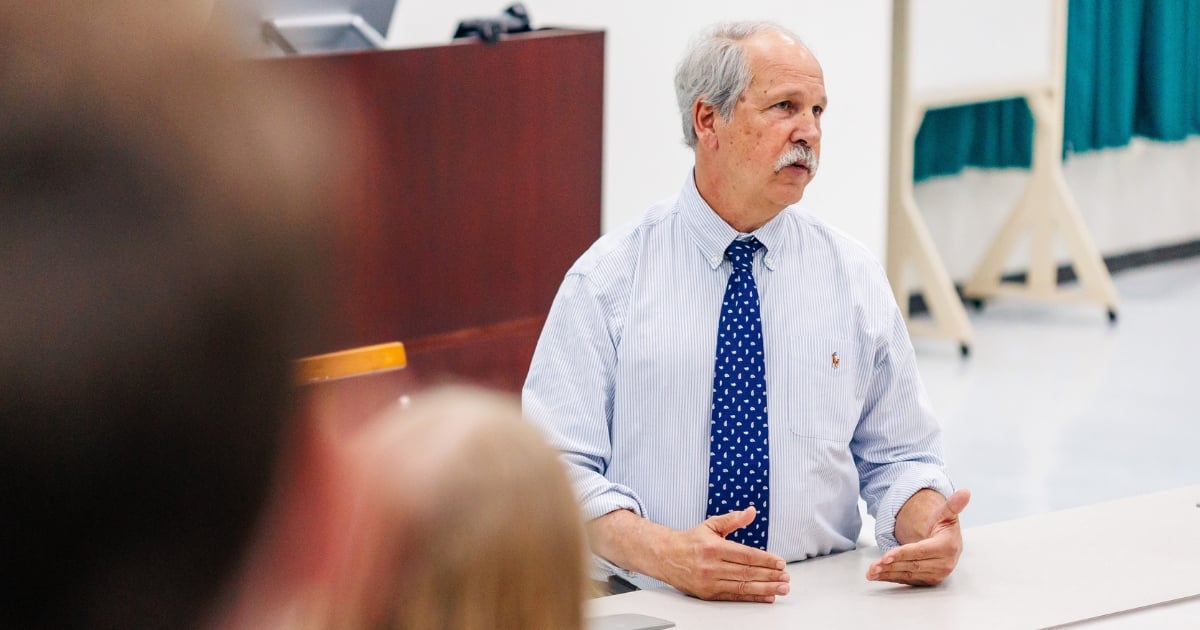
UMHS President Warren Ross.
You never planned on a career in medical education. How did you get here?
Warren: Before I got involved in medical education, I had a degree in political science and a strong interest in government and politics. Then I went to Berklee College of Music because I thought I was going to be a professional musician.
After Berklee, I was involved with bands and recording, and basically starved to death.
So I got involved with my father, who was just starting Ross University. At the same time, I decided to go to law school because I thought I wanted to become an entertainment lawyer.
That same year, I bought my first house, had my first child, started law school, and worked full-time at Ross University. It was insane.
But it turned out to be a great education because over the years I became involved in every aspect of building a university, from admissions and marketing to accreditation, campus development, government relations, and curriculum. I've now spent more than 45 years building institutions and studying what works in medical education.
After all those years, what do you think many medical schools get wrong?
Warren: I think the biggest mistake is believing that scale and student success are the same thing. Many schools bring in anywhere from 300 to 500 students a semester.
Our average class is between 50 and 100 students. That's intentional.
The reason U.S. medical schools keep classes relatively small is because they want a good
student-to-faculty ratio. They understand that students need support, guidance, and access to faculty.
We're currently about 7-to-1. That's important because you need that type of standard to ensure students are getting the services and support they need to perform at a very high level.
Why has keeping UMHS small remained such a priority?
Warren: Because if you're going to admit a student, you have a responsibility to help that student succeed.
After every examination, we review student performance. Anyone who's at risk is required to meet with faculty. They're required to meet with learning specialists. If test anxiety is part of the issue, they're referred to counselors. These aren't optional services.
As a small school, you can provide the support services necessary to ensure student success. When you do that, students perform better. They stay in school. They become physicians.
UMHS has an attrition rate that is dramatically lower than many Caribbean medical schools. Why?
Warren: Because we've built a model around intervention rather than elimination.
Many Caribbean schools have attrition rates between 30% and 50%. Ours is around 4%. That doesn't happen by accident.
It's a direct result of having a personal approach, the right support services, learning specialists, counselors, faculty engagement, and making sure students receive help when they need it.
Students and alumni frequently talk about your accessibility. Why is that important to you?
Warren: I've dedicated my life to these students. I want to make sure they have the best education possible. I want to make sure that every student who has a concern, a problem, or a question can get help.
I'm morally obligated to anybody who's accepted into this program to ensure that they're going to succeed. Whatever I can do to make that happen, I will.
I tell students they can email me any time of day or night. I believe in an open-door policy, not only for myself, but for all of my deans and faculty.
Students should always have someone available to help them.
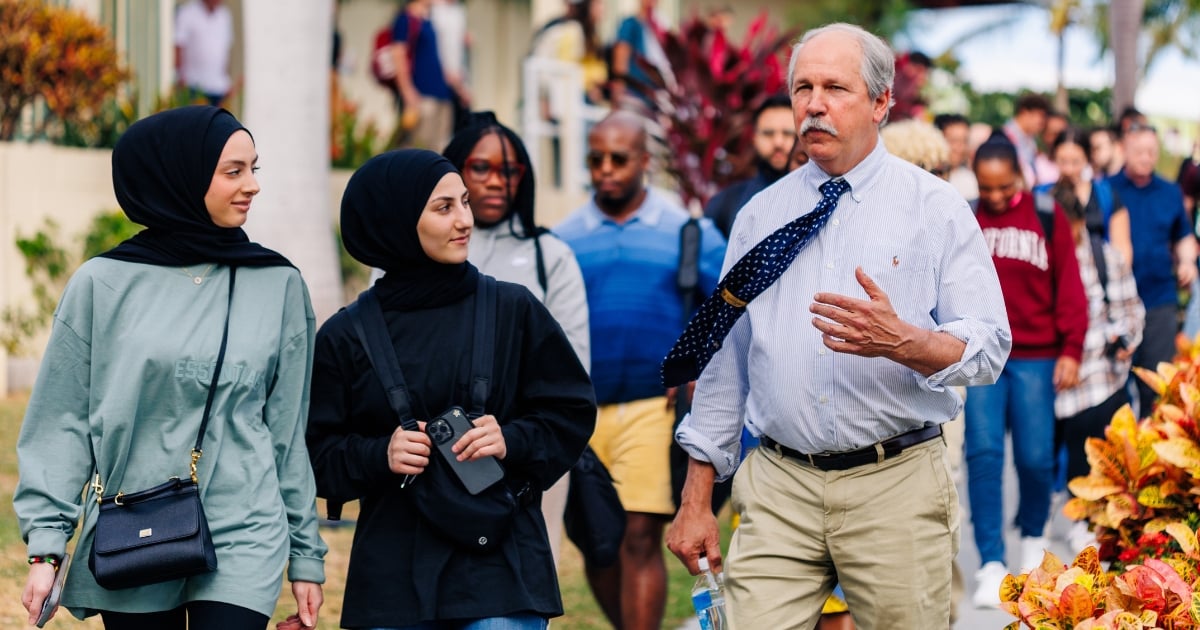
President Ross engaging directly with students on campus.
What role do students play in shaping the university?
Warren: A huge role. We believe in a bottom-up philosophy. Changes start with faculty, but students are involved throughout the process.
We're constantly surveying students. We're looking at strengths and deficiencies. They help guide us on what improvements should be made. They even participate in faculty hiring.
Candidates come to campus, give lectures, meet with students, and students provide feedback on whether they believe that person will be an effective educator. The students have a role in who is actually hired.
You often hear concerns about Caribbean medical schools. What do people misunderstand?
Warren: People should focus on outcomes. Is the school accredited? Does it have strong clinical affiliations? Do students perform well on licensing examinations? Do graduates obtain residencies? Those are the questions that matter.
We're accredited by recognized accrediting bodies. We have affiliations with teaching hospitals across the United States, Puerto Rico, and Canada. We prepare students for USMLE from day one.
At the end of the day, residency directors care whether you're qualified, competent, and prepared. That's what students have to demonstrate.
Is there a student story that captures what UMHS is all about?
Ross: I think about students like Dr. Kerthy Sugunathevan. She started in the Accelerated Review Program and used that opportunity to build the foundation she needed. She developed her test-taking skills, communication skills, time management skills, and confidence. Then she just took off.
She became deeply involved in the university, served as a teaching assistant, returned to mentor other students, and eventually earned a highly competitive surgical residency. What her story shows is that when somebody is focused, motivated, and willing to work hard, they can accomplish anything.
That's what medical education should do. It should help students realize their potential.
After four decades in medical education, what still motivates you?
Warren: Watching students succeed. That's what I live for. I want students to graduate. I want them to pass their licensing examinations. I want them to obtain residencies. I want them to become outstanding physicians.
Everything we do is built around that objective. And I think that extends beyond academics.
Students should care about people. They should care about their patients. They should want the best for them. Empathy is important. Not only to me as a president, but to everyone. It's caring about people.
For Warren Ross, medical education has never been about how many students a school can enroll. It has always been about what happens after they're admitted.
In a sector often measured by financial growth, his measure of success remains remarkably simple: accept students, support them relentlessly, and help them become physicians.
It's a philosophy that has shaped UMHS for decades, and one that continues to challenge conventional assumptions about what Caribbean medical education can be.
Megan is a Public Relations & Communications Consultant for UMHS. When she's not working with UMHS faculty, students and alumni to promote their expertise through media coverage and special events, she enjoys spending time outdoors in her hometown of San Diego.


